
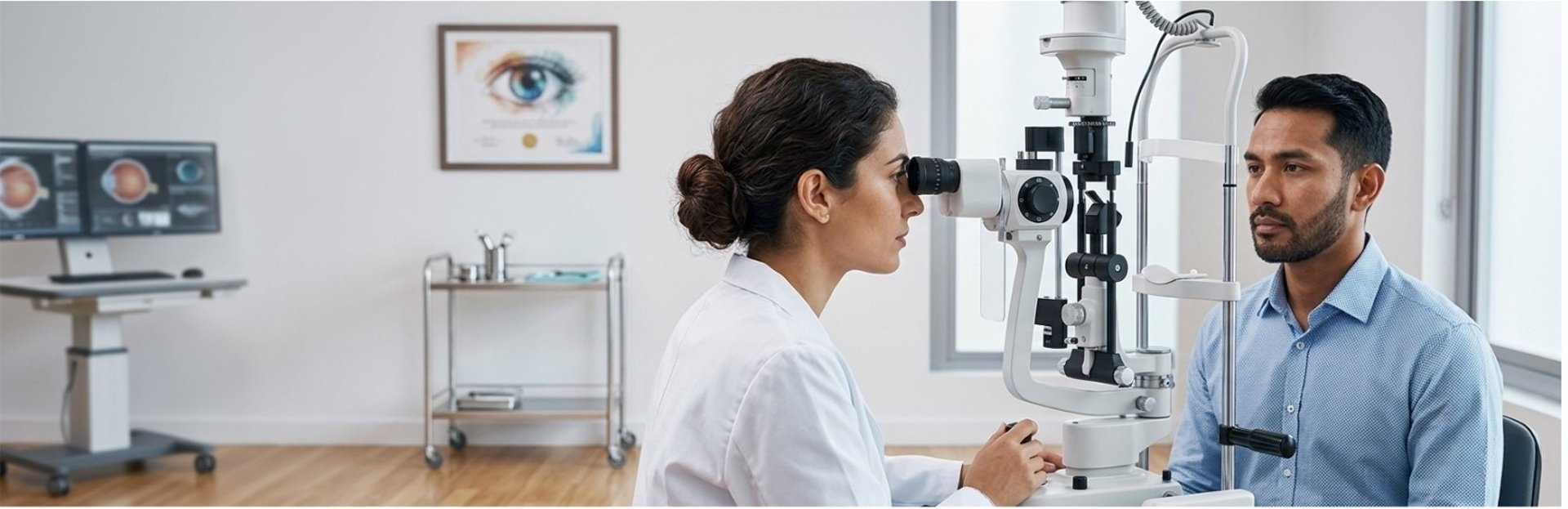
Cataract (Motiyabind) Surgery in Delhi: Paschim Vihar, West Delhi
Cataract (motiyabind) is a gradual clouding of the eye's natural lens that makes vision blurred, dull or glary. At New Vision Eye Centre, a NABH-accredited eye hospital in Paschim Vihar, West Delhi, we see patients from across Delhi for cataract surgery with a small incision and no stitches needed, done under topical anaesthesia (numbing drops). No injection is given, so no patch is needed. Surgeon: Dr Manik Mittal, MBBS (AIIMS), MD Ophthal (AIIMS), DMC Reg No 06043.
✔ Full NABH accredited Eye Care Organisation (ECO-2023-0384, valid to 10 May 2030) ·
✔ Dr Manik Mittal, MD (Ophthal), AIIMS New Delhi, 16 yrs exp ·
✔ 20,000+ cataract surgeries performed personally ·
✔ 75,000+ patient visits since 2017 ·
✔ NABH-accredited eye hospital ·
✔ Cashless with major health insurers & TPAs ·
✔ CGHS, ECHS & Ayushman Bharat accepted ·
✔ Easy EMI facility available
What is a cataract?


Inside your eye there is a natural, clear lens that focuses light. With age, this lens slowly turns cloudy. That cloudiness is a cataract, called motiyabind in Hindi.
It usually develops over years, so many people don't notice until everyday tasks get harder. Common signs:
• Blurry, hazy or foggy vision
• Glare or halos around lights, especially headlights at night
• Colours look faded or yellowish
• Frequent changes in spectacle power
• Difficulty reading, watching TV or driving at night
Cataract is most common after 40–50, but it can come earlier. Diabetes, long-term steroid use, eye injury, a family history of cataract and a lot of direct sunlight all raise the risk.
Glasses cannot clear a cataract, and there is no eye drop or medicine that removes it. The only treatment is surgery to replace the cloudy lens with a clear artificial lens (an intraocular lens, or IOL).
When should you have cataract surgery?
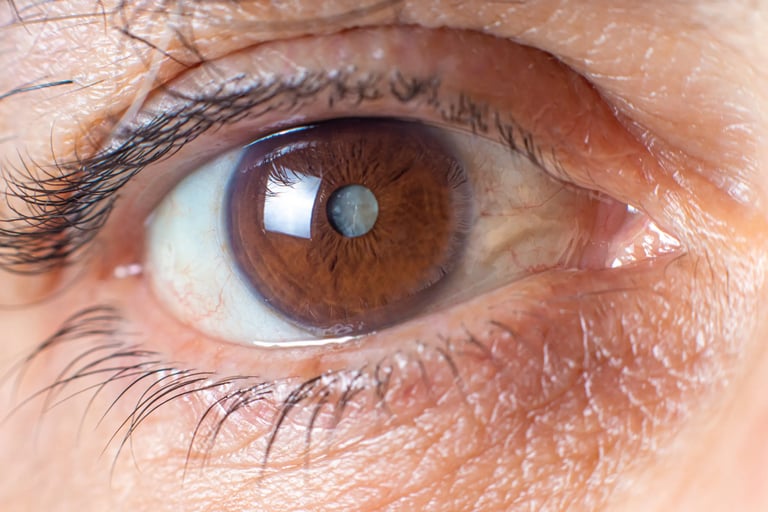
You don't need to wait for a cataract to "ripen" (pakna). With modern small-incision surgery, the usual advice is to operate when the cataract starts affecting your daily life: reading, driving, work, walking safely or recognising faces. Waiting too long can make the cataract harder and the surgery more demanding.
Dr Mittal will examine your eyes, check whether the cataract is the real cause of your blurred vision (and not, for example, a retina or glaucoma problem), and tell you honestly whether surgery is needed now or can wait.
Lens options (IOLs), including premium lens implants
During surgery your cloudy lens is replaced with a clear artificial lens that normally lasts for life. Alongside standard monofocal lenses, we offer premium lens implants: toric, multifocal, trifocal and EDOF.
Lens types overview:
- Monofocal: Clear vision at one distance, usually far. You will usually still need reading glasses.
- Toric: Also corrects astigmatism (cylindrical power). For eyes with significant cylinder; sharper distance vision without thick cylindrical glasses.
- Multifocal: Designed to give distance and near vision. Can reduce dependence on glasses; some people notice halos around lights at night. Not suitable for every eye.
- Trifocal: A type of multifocal lens designed for distance, intermediate (computer) and near vision. Can reduce dependence on glasses at all three distances; night halos are possible. Needs a healthy retina and careful measurements.
- EDOF (extended depth of focus): Gives a continuous range of vision from distance to intermediate. Often fewer night halos than multifocal lenses; you may still need reading glasses for fine print.
Toric versions of some premium lenses are available if you also have astigmatism.
Which lens suits you depends on your eye measurements, eye health, lifestyle (reading, driving, screen work) and budget. Dr Mittal explains the pros and cons of each option after your tests, so you can choose with full information.


MONOFOCAL LENS
- Clear vision at one distance (usually far)
- Most common lens type
- Reading glasses usually still needed

MULTIFOCAL LENS
- Distance and near vision combined
- Trifocal options for computer distance
- Significantly reduces dependence on glasses


TORIC LENS
- Corrects corneal astigmatism (cylinder)
- Sharper distance focus for astigmatic eyes
- Also available in multifocal/EDOF designs
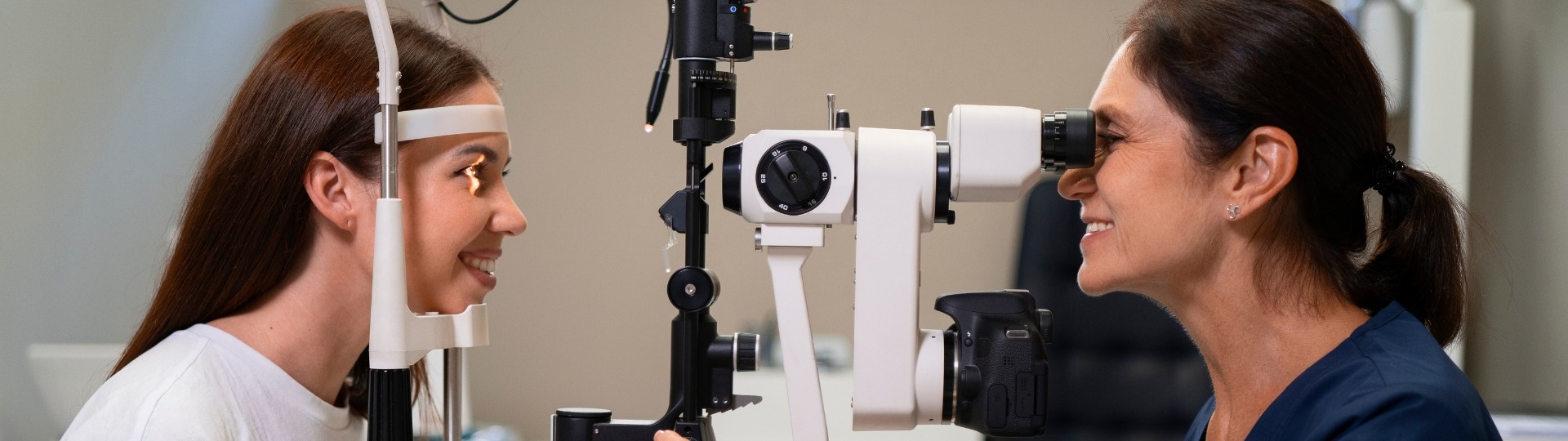
What happens on the day of surgery
Before surgery (at your consultation):
- A full eye check, lens-power measurements (biometry) and other tests as needed
- A review of your general health: diabetes, blood pressure, and medicines such as blood thinners
- A clear explanation of the lens options, the cost for your chosen lens, and the insurance/EMI paperwork
On the day:
- Arrive at your appointment time with one attendant. Your eye is cleaned and numbed with drops.
- The surgery itself usually takes about 6–8 minutes. Most patients feel only mild pressure, not pain.
- You rest for a short while, receive your eye drops and instructions, and go home the same day with an eye shield.
For families: most patients are elderly, so please plan for one attendant to come along, bring the patient's current medicines list, and arrange a drop home. The centre has lift and wheelchair access. Consultations and surgery are by prior appointment only.

Recovery and aftercare
- Many patients notice clearer vision within a day or two. Full healing usually takes about 4–6 weeks.
- Use the prescribed eye drops exactly as advised, and come for the follow-up visits.
- Don't rub or press the eye. Wear the shield while sleeping as advised.
- Avoid getting water, soap or dust into the eye for the period Dr Mittal advises.
- Light daily activities, TV and walking are usually fine from the next day.
- New glasses (if needed) are usually prescribed after the eye settles.
Call us straight away if you have increasing pain, a sudden drop in vision, or increasing redness.
Is cataract surgery safe?
Cataract surgery is one of the most commonly performed operations in the world, and for most people it improves vision. As with any surgery, there are risks, such as inflammation, raised eye pressure, infection (rare), swelling at the back of the eye, or a later haze behind the new lens (which can be cleared with an in-house YAG laser; see the FAQ below). Dr Mittal discusses the risks that apply to your eyes before you decide. We can't promise a specific result, but we will explain what's realistic for you.
About your surgeon: Dr Manik Mittal
Dr Manik Mittal is the founder of New Vision Eye Centre in Paschim Vihar. He completed his MBBS and MD in Ophthalmology at the All India Institute of Medical Sciences (AIIMS), New Delhi, and has 16 years' experience in ophthalmology. He performs cataract, LASIK, Contoura Vision and ICL surgery, and is registered with the Delhi Medical Council (Reg. No. 06043).
Over his career, Dr Mittal has personally performed more than 20,000 cataract surgeries, a milestone that includes operations from before he founded New Vision Eye Centre. The centre has had 75,000+ patient visits since 2017.
His approach: listen to the patient first, explain everything clearly, and recommend only what is truly needed. Read more about Dr Manik Mittal and New Vision Eye Centre.
NABH accredited eye centre
New Vision Eye Centre is a full NABH accredited Eye Care Organisation (National Accreditation Board for Hospitals & Healthcare Providers). Certificate No. ECO-2023-0384. First accredited on 11 May 2023; current accreditation valid from 11 May 2026 to 10 May 2030.
Cost of cataract surgery in Delhi: what affects it
There is no single figure that fits everyone, because the cost depends on your eye and your choices. The main factors are:
The lens you choose: monofocal, toric and premium lenses (multifocal, trifocal, EDOF) differ in cost
The surgical technique: the approach your surgeon advises for your eye
Tests needed before surgery: biometry and any additional scans your eyes need
One eye or both eyes: usually each eye is operated on a separate day
Your insurance policy: room/package limits, cataract sub-limits and co-payment terms
The exact cost is explained at your consultation, after your eye check, in writing if you ask for it, before you decide. Easy EMI facility available. We accept cash, credit/debit cards and UPI.
Insurance partners and cashless treatment
Cashless treatment is available with all major health insurance companies and TPAs, including public-sector insurers via the GIPSA PPN network. Easy EMI facility available.
Bring your health card or policy number and a photo ID to the consultation. Our team starts the cashless pre-authorisation with your insurer or TPA.
Cataract surgery is usually covered by health insurance, subject to your policy terms (waiting periods, cataract sub-limits, co-payments).
CGHS, ECHS & Ayushman Bharat accepted. We are also empanelled with DGEHS and other government and PSU panels, each with its own rules (cashless, cashless for pensioners, or reimbursement). Please bring your card or referral and call ahead to confirm your eligibility.
See our cashless eye treatment page for the health insurance companies, TPAs and government panels we work with.
Patients from across India and overseas
Patients come to us from Paschim Vihar and across West Delhi (Punjabi Bagh, Meera Bagh, Peeragarhi, Jwala Heri, Rajouri Garden, Janakpuri, Rohini and nearby areas), from all over Delhi NCR, from other states, and from abroad. If you're travelling to see us:
Book before you travel. Consultations are by prior appointment only (Monday–Saturday, 10:00 AM – 7:00 PM; Sunday closed).
WhatsApp pre-consultation. Send your recent eye reports, prescriptions and any scans to Surgery Counsellor: 89296 30330 before you travel. Our team will tell you which tests are likely to be needed and roughly how many days to plan for. The final advice is always given after Dr Mittal examines your eyes in person.
Plan your days. Ask us how long to plan for the tests, the surgery and the first follow-up visit, and how later follow-ups will be arranged if you live far away.
Getting here. The nearest metro station is Paschim Vihar West, on the Delhi Metro network. The centre has lift and wheelchair access.
Where to stay. Hotels and guest houses are available in and around Paschim Vihar. Ask our team for suggestions when you book.
Coming from outside India? Bring your passport and previous eye reports. Cashless insurance applies to Indian health insurers and TPAs, so if your cover is from outside India, please check with us in advance.
Hindi and English are spoken at the centre.
For patients from West Delhi
Many of our cataract patients travel from nearby areas. If you live close to one of these, the page for your area has travel tips and local details:
Frequently asked questions
Is cataract surgery painful?
The eye is numbed with drops, so most patients feel only mild pressure or touch during the procedure. Some mild grittiness or watering afterwards is common and settles with the prescribed drops.
How long does the operation take? Will I need to stay overnight?
The surgery itself usually takes about 6–8 minutes. Most patients go home the same day after a short rest.
Do I have to wait for the cataract to ripen?
No. Modern small-incision surgery doesn't need a "ripe" cataract. The usual advice is to operate when the cataract starts to interfere with daily life. Very hard, long-neglected cataracts can make surgery more complex.
Which lens is right for me?
It depends on your eye measurements, whether you have astigmatism, your eye health and how you use your eyes. Monofocal lenses give clear distance vision (you'll likely need reading glasses), toric lenses also correct cylindrical power, multifocal and trifocal lenses aim to reduce dependence on glasses for distance and near (trifocals add intermediate), and EDOF lenses give a smooth range from distance to intermediate. Dr Mittal will recommend options after your tests.
Can both eyes be operated on the same day?
Usually one eye is done at a time, and the second eye a little later, once the first has settled. Dr Mittal will advise the right gap for you.
How much does cataract surgery cost?
It depends on the lens you choose, the technique, the tests needed, whether one or both eyes are treated, and your insurance cover. The exact cost is explained at your consultation after your eye check. Easy EMI facility available.
Is cataract surgery covered by insurance?
Cashless treatment is available with all major health insurance companies and TPAs. Coverage depends on your policy's terms, such as waiting periods and cataract sub-limits; our team checks this with your insurer before surgery. Public-sector insurers are covered via the GIPSA PPN network. We are also empanelled with CGHS, ECHS, Ayushman Bharat, DGEHS and other government panels; see our cashless eye treatment page.
Can a cataract come back after surgery?
The cataract itself cannot come back, because the cloudy lens has been removed. Some people later develop a thin haze behind the new lens (called "after-cataract" or posterior capsule opacification). It is treated with a quick outpatient YAG laser procedure under numbing drops, which we do in-house at our Paschim Vihar centre. It takes a few minutes, needs no incision, and vision usually clears within a day or so.
I have diabetes. Can I have cataract surgery?
Usually yes, once your blood sugar is reasonably controlled. People with diabetes also need a retina check before and after surgery, and Dr Mittal will plan this with you. If the retina needs treatment, retina laser and anti-VEGF injections are also done in-house.
What precautions should I take after surgery?
Use your drops as prescribed, don't rub the eye, keep water and dust out of it for the advised period, wear the shield while sleeping, and don't miss follow-up visits. We give you a written instruction sheet on the day.
Do I need an appointment?
Yes. Consultations are by prior appointment only, Monday to Saturday, 10 AM to 7 PM; we are closed on Sunday. Call or WhatsApp 81309 30330 to book.
I live outside Delhi or abroad. Can I be treated here?
Yes. Patients come to us from across Delhi NCR, other states and overseas. Send your recent eye reports on WhatsApp (81309 30330) before you travel, and book your appointment in advance. The final advice is given after Dr Mittal examines your eyes in person.
Motiyabind ka operation kitni der ka hota hai? Kya dard hota hai?
Operation mein aam taur par 6–8 minute lagte hain. Aankh ko dawai ki boondon se sunn kiya jata hai, isliye zyada tar marizon ko sirf halka dabav mehsoos hota hai. Usi din ghar ja sakte hain.
Motiyabind operation ka kharcha kitna hai?
Kharcha lens ke type (monofocal, toric, multifocal, trifocal, EDOF), surgery ki technique, zaroori tests aur ek ya dono aankhon par nirbhar karta hai. Sahi kharcha aankh ki jaanch ke baad consultation mein bataya jata hai. Sabhi major health insurance companies aur TPAs ke saath cashless suvidha hai (GIPSA PPN ke through sarkari insurance companies bhi). CGHS, ECHS aur Ayushman Bharat bhi accepted hain, aur easy EMI facility available hai.
क्या मोतियाबिंद के पकने का इंतज़ार करना ज़रूरी है?
नहीं। आजकल की छोटे चीरे वाली सर्जरी में मोतियाबिंद पकने का इंतज़ार नहीं करना पड़ता। जब धुंधलेपन से पढ़ने, गाड़ी चलाने या रोज़ के काम में दिक्कत होने लगे, तब ऑपरेशन की सलाह दी जाती है। ज़्यादा देर करने से मोतियाबिंद सख्त हो सकता है और ऑपरेशन मुश्किल हो सकता है।
Other eye care under one roof
If your eye check finds another problem, much of the treatment is also done in-house at our Paschim Vihar centre:
- Glaucoma: glaucoma laser (SLT, laser iridotomy) and glaucoma surgery
- Retina: retina laser and intravitreal anti-VEGF injections, e.g. for diabetic eye disease
- After-cataract haze: YAG laser
- Pterygium surgery with graft, squint treatment and surgery, and eyelid care (ptosis surgery, chalazion/stye and minor lid procedures, DCR for blocked tear ducts)
- Diagnostics: OCT, visual field and corneal topography
- Glasses removal: LASIK and Contoura Vision and ICL surgery for high eye power
- Optical store on site for your glasses after surgery
Visit us
New Vision Eye Centre
A-5/233, 1st and 2nd Floor, Paschim Vihar, New Delhi-110063
Mobile/WhatsApp: 81309 30330 · Landline: 011-49785858
Consultations: Monday–Saturday, 10:00 AM – 7:00 PM, by prior appointment only · Sunday closed
Getting here: Get directions on Google Maps · nearest metro station Paschim Vihar West · Lift and wheelchair access available · Contact & directions
Don't let cataract hold you back
Book an eye check with Dr Manik Mittal. We'll tell you honestly whether you need surgery now, which lens suits you, and what it will cost before you decide.
📞 Call / WhatsApp 81309 30330 · 💬 WhatsApp us · Book a cataract consultation
Medically reviewed by Dr Manik Mittal, MD (Ophthalmology), AIIMS New Delhi. Last reviewed: September 2026. This page is general information, not a substitute for an eye examination.
New Vision Eye Centre is a NABH-accredited eye care clinic in Paschim Vihar, New Delhi, providing vision correction and comprehensive eye treatment. Led by Dr Manik Mittal, the centre provides LASIK, Contoura Vision, cataract surgery, ICL and complete eye checkups.
Quick Links
newvisioneyecentre@gmail.com
011-49785858, 81309 30330
© 2026. All rights reserved.
Our Services